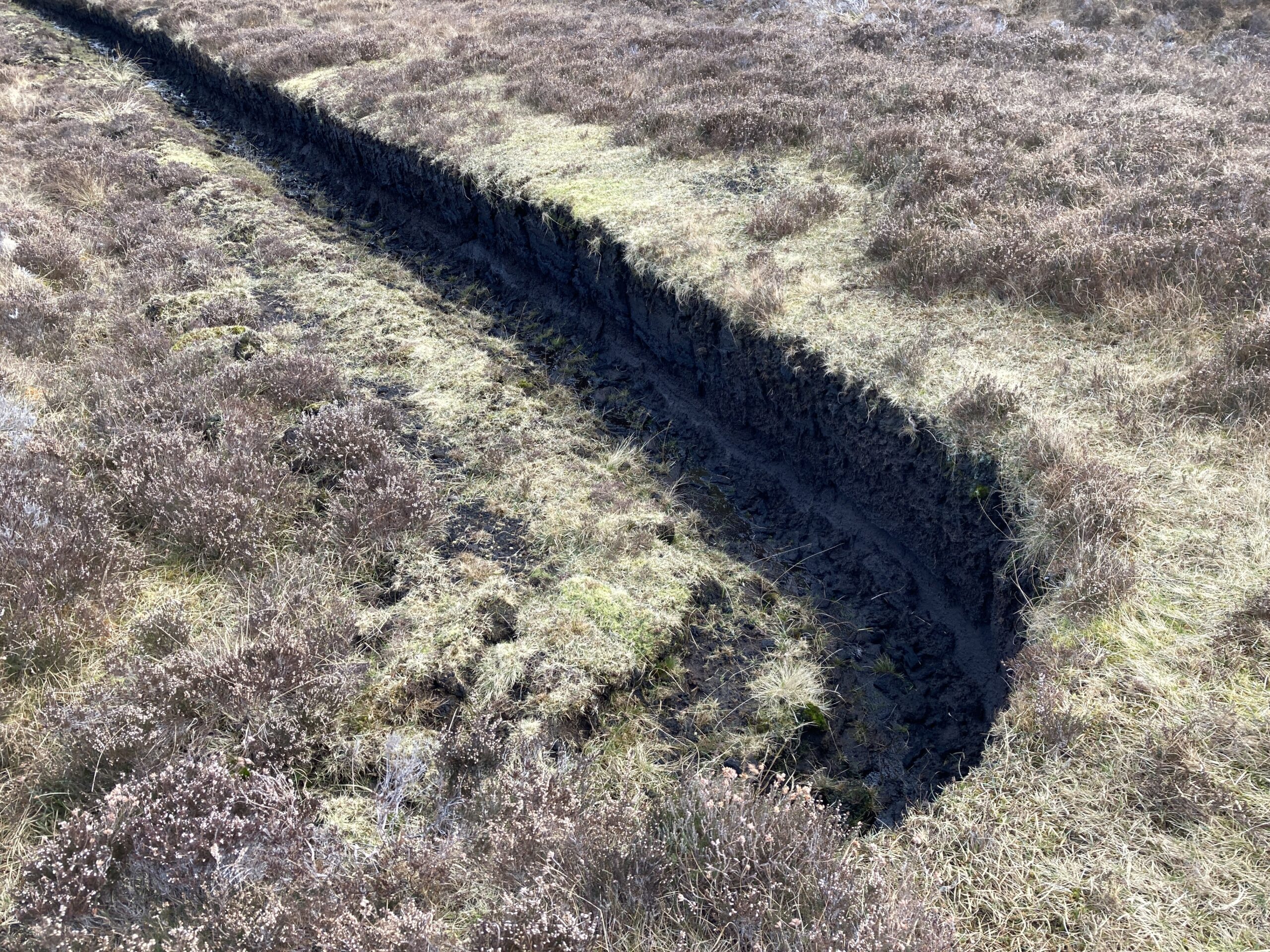
Peat covers most of the interior of Lewis, in places to a depth of several metres. It forms where waterlogged, acidic ground stops dead plant material from decaying, so it accumulates instead of rotting away, at something in the order of a millimetre a year. The peat on Lewis has taken thousands of years to build up.
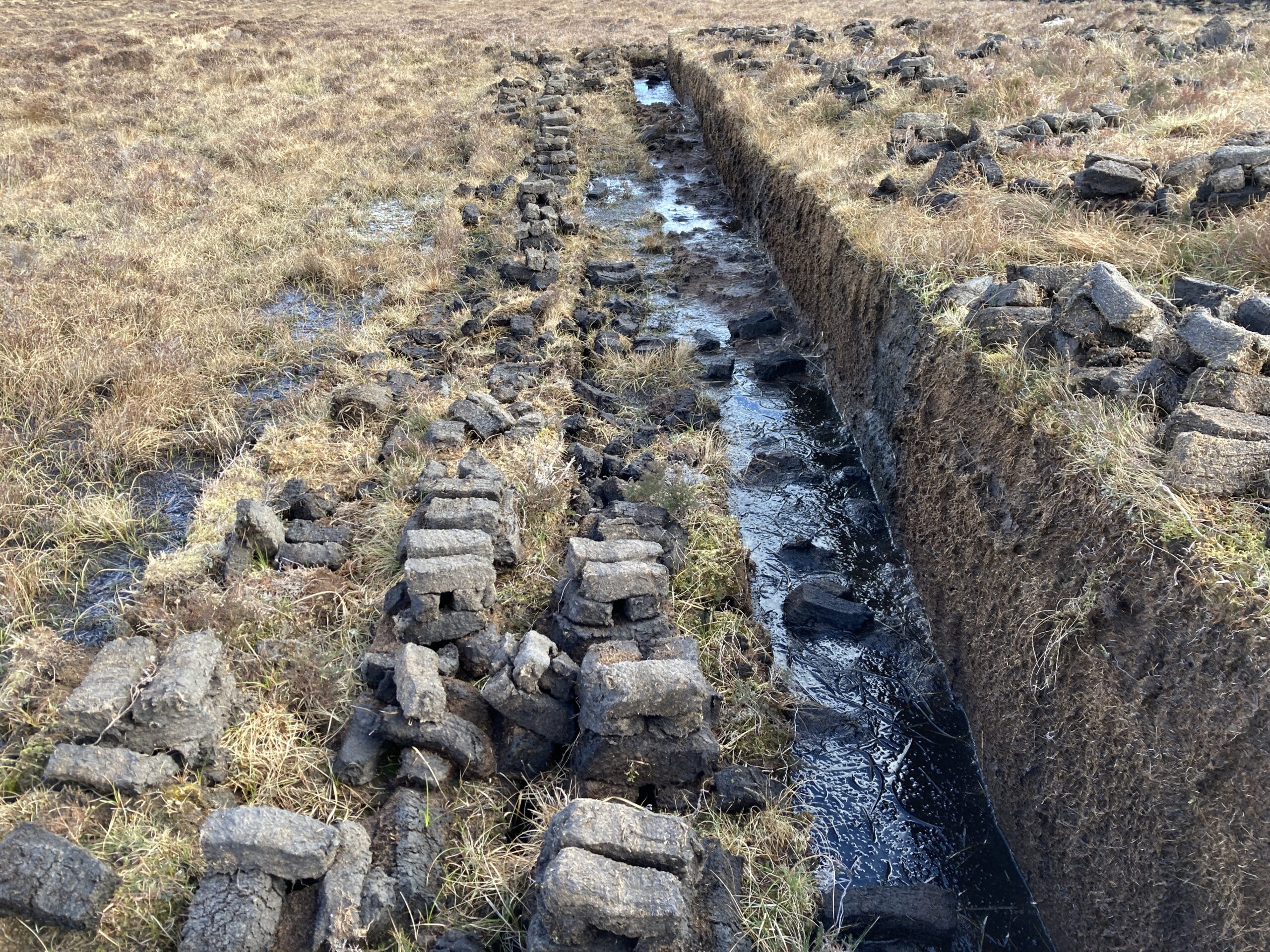
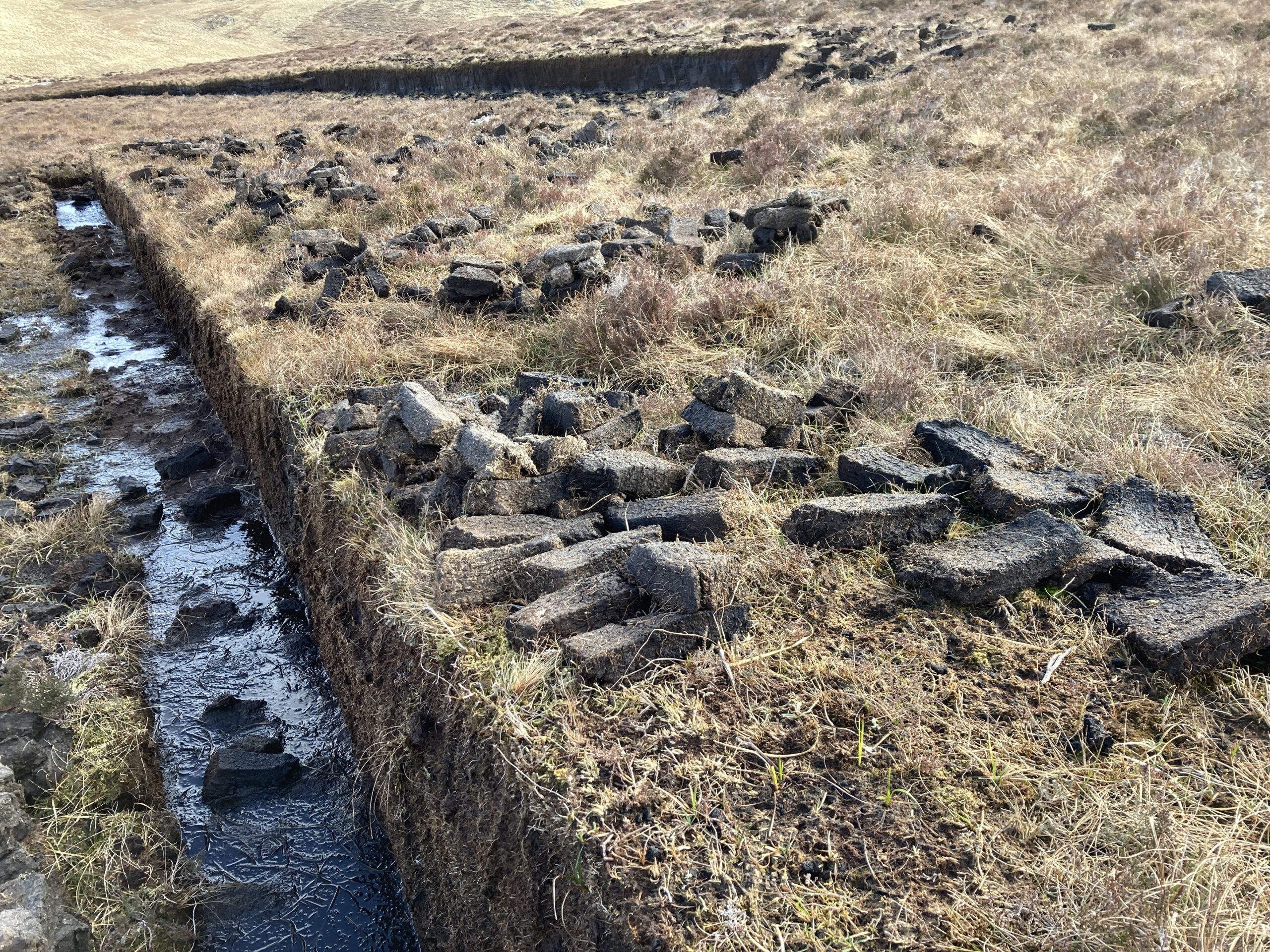
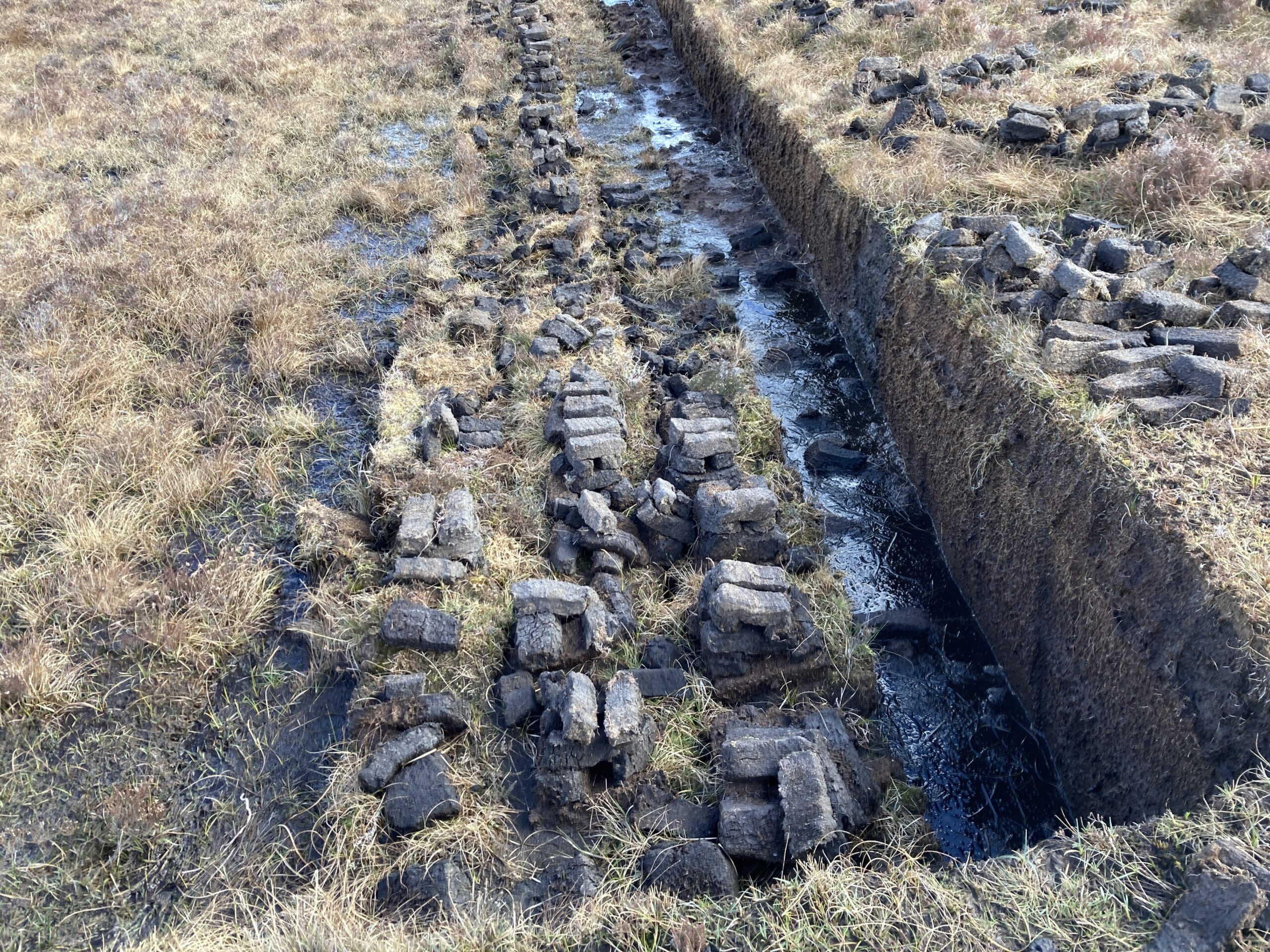
Cutting peat for fuel is still part of the island year. The banks are cut in late spring, the turfs are stood on end to dry through the summer, and the dried peat is brought home before the autumn weather sets in.
Peat on the Western Isles
Peat is formed through the accumulation of dead plant material, primarily mosses and heather. The damp, acidic conditions of the peatlands slow down the decay process, allowing the plant material to build up over time and eventually become peat.
Peat is a valuable resource on the Western Isles, where it has been used for centuries as a fuel source and for horticulture. To farm peat, people typically use a tool called a peat iron to cut blocks of peat from the surface of the peat bog. These blocks are then left to dry for several weeks, either in the sun or in a peat shed, before being used as fuel or for gardening.
In recent years, the practice of peat cutting has become more controversial due to concerns about its impact on the environment. Peatlands play a crucial role in storing carbon, and cutting or burning peat can release this carbon into the atmosphere, contributing to climate change. In addition, peatlands are important habitats for a variety of plants and animals, including rare and endangered species.
To address these concerns, some efforts have been made to promote more sustainable methods of peat farming, such as the use of peat-free alternatives in horticulture and the restoration of damaged peatlands. These efforts aim to balance the economic benefits of peat farming with the need to protect the environment and preserve the unique landscapes of the Western Isles.
In short
Peat covers most of the interior of the Isle of Lewis, sometimes several metres deep. It forms where waterlogged acidic ground prevents dead plant material decaying, accumulating at about a millimetre a year. Peat banks are cut in late spring, dried through summer and carried home before autumn. The peatlands also store large amounts of carbon and feed the island’s lochs and rivers.
Frequently asked questions
What is peat and how does it form?
Peat is partly decayed plant material, mostly mosses and heather, that builds up where the ground is waterlogged and acidic enough to stop it decomposing. It accumulates at roughly a millimetre a year, so the deep peat on Lewis represents thousands of years of growth.
When is peat cut on Lewis and Harris?
The banks are cut in late spring, usually from around April into May. The turfs are then stood on end to dry through the summer and carried home before the autumn weather arrives.
Do people still burn peat on the islands?
Yes, though far less than they once did. Many households now use oil or electricity for main heating and burn peat in a stove or open fire alongside it. The smell of peat smoke is still a common one in island villages.
Why do the peatlands matter beyond fuel?
They hold an enormous amount of carbon and they shape the whole hydrology of the island, feeding the lochs and rivers. Damaged or drained peat releases that carbon, which is why restoration work has become a serious concern across the Hebrides.