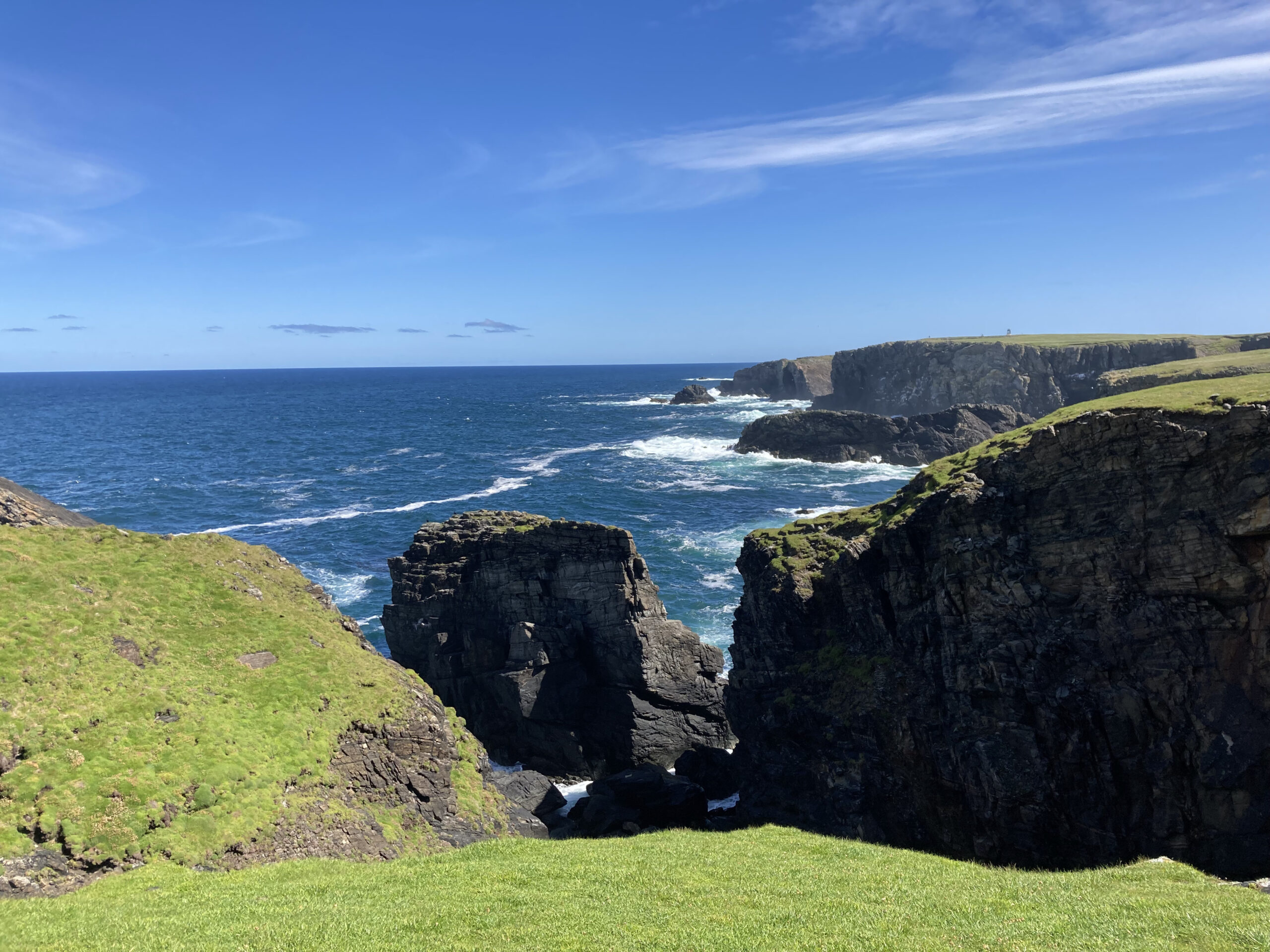
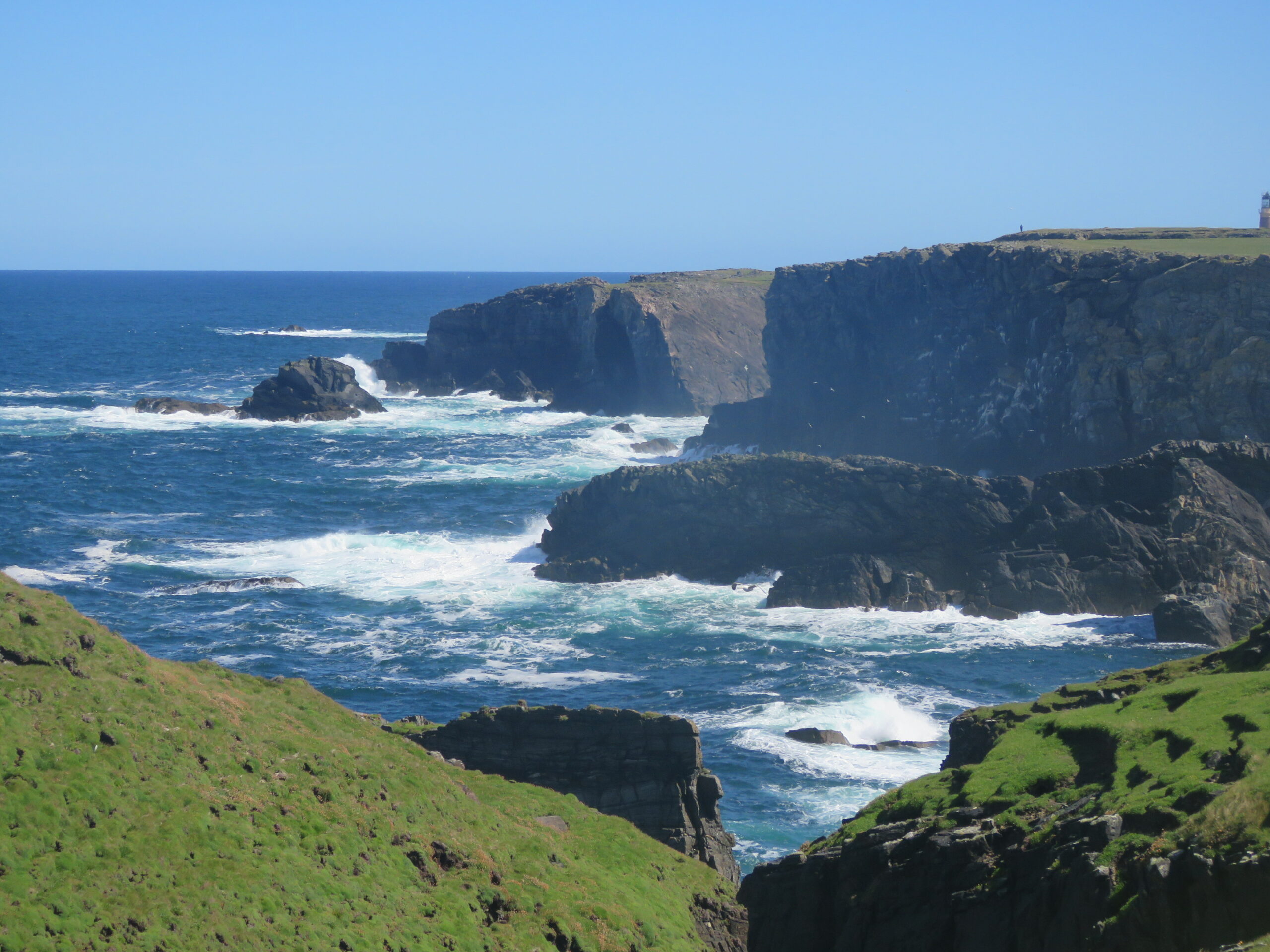
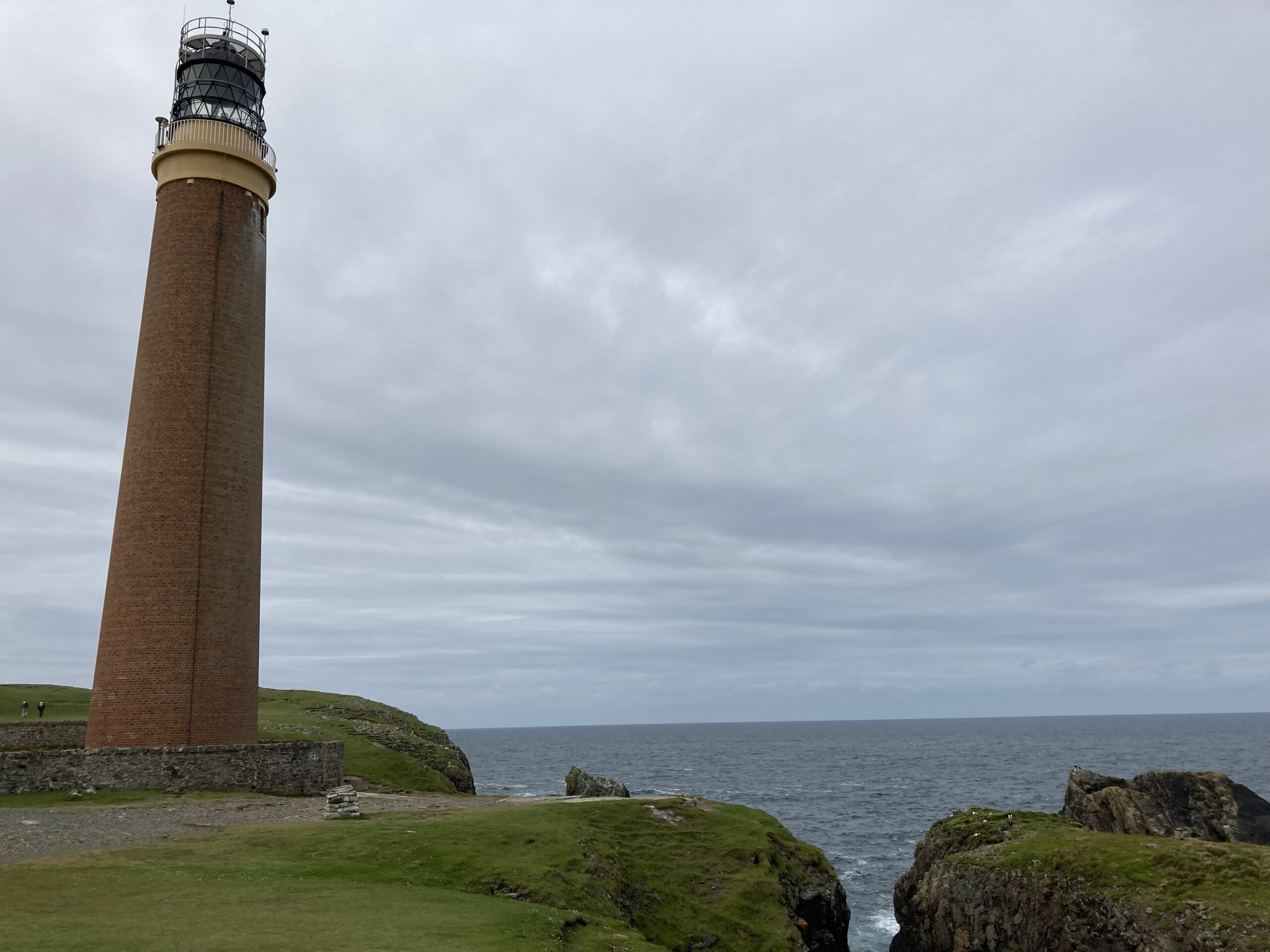
The Butt of Lewis (Rubha Robhanais) is the most northerly point of the Isle of Lewis, where the Atlantic meets a wall of dark gneiss cliffs. Its red brick lighthouse, designed by David and Thomas Stevenson and first lit in 1862, is unusual in being unpainted brick rather than the white harl used on most Scottish lights.
The cliffs here hold large numbers of seabirds through the breeding season, and the point has a long-standing reputation as one of the windiest places in the United Kingdom. Access is free, with a car park at the end of the road and coastal walks in both directions.
The Butt of Lewis
The Butt of Lewis is the most northerly point on the Isle of Lewis where the Atlantic Ocean meets the rugged coastline. The Butt of Lewis is a popular tourist destination, known for its stunning views and rugged beauty.
One of the main attractions of the Butt of Lewis is the lighthouse, which was built in 1862 and still operates today. Visitors can climb to the top of the lighthouse and take in the panoramic views of the surrounding area, including the cliffs, sea, and distant islands. The lighthouse is also a popular spot for wildlife watching, and visitors may be able to spot whales, dolphins, and seabirds in the surrounding waters.
In addition to the lighthouse, there are several hiking trails that wind their way around the Butt of Lewis. These trails offer visitors the opportunity to explore the rugged coastline and take in the stunning views of the sea and surrounding landscape. There are also several secluded beaches and coves in the area, which are perfect for picnics or simply relaxing and taking in the beauty of the scenery.
Overall, it is one of the must-see destinations for anyone visiting the Outer Hebrides. With its stunning views, rugged coastline, and abundance of wildlife, it is a truly unique and unforgettable experience that is sure to leave a lasting impression on all who visit.
In short
The Butt of Lewis is the most northerly point of the Isle of Lewis, about 28 miles north of Stornoway on the A857, where the Atlantic meets dark gneiss cliffs. Its red brick lighthouse, designed by David and Thomas Stevenson, was first lit in 1862 and is unusual for being unpainted brick. The cliffs hold breeding seabirds and the point is famously windy. Access and parking are free.
Frequently asked questions
Where is the Butt of Lewis?
At the very northern tip of the Isle of Lewis beyond Ness, about 28 miles north of Stornoway on the A857. The drive takes around 45 minutes on good road.
Can you go inside the Butt of Lewis lighthouse?
No, the lighthouse is automated and not open to visitors, but you can walk right up to it. The car park is at the end of the road and the cliffs and coastal paths around it are freely accessible.
Why is the Butt of Lewis lighthouse red?
It is built of unpainted red brick rather than the harled and whitewashed stone used for most Scottish lighthouses. It was designed by David and Thomas Stevenson and first lit in 1862.
Is the Butt of Lewis really the windiest place in Britain?
It has long held that reputation and has recorded some remarkable wind speeds. Whether or not the title holds in any given year, it is genuinely exposed, so hold on to car doors and keep well back from the cliff edge.