Bosta (Bostadh) is a small, sheltered beach at the northern tip of Great Bernera, an island off the west coast of Lewis joined to the mainland by a bridge. It is smaller than the great west coast beaches, but the combination of white sand, clear water and two unusual things to see makes the drive out worth it.
The Iron Age house
Storms in 1993 exposed a group of Iron Age and Pictish houses buried in the dunes behind the beach. The site was excavated and then re-covered to protect it, and a full-size reconstruction of one of the houses was built nearby. It opens to visitors in the summer months, staffed by the local community, and going inside a smoke-filled roundhouse is the closest most people will get to understanding how islanders actually lived here.
The Time and Tide Bell
On the rocks at the edge of the beach hangs one of Marcus Vergette’s Time and Tide Bells, installed around the British coast to be rung by the rising sea. At high tide it sounds by itself. Bosta is reached by crossing the bridge to Great Bernera and following the road north to its end, where there is a car park above the beach.
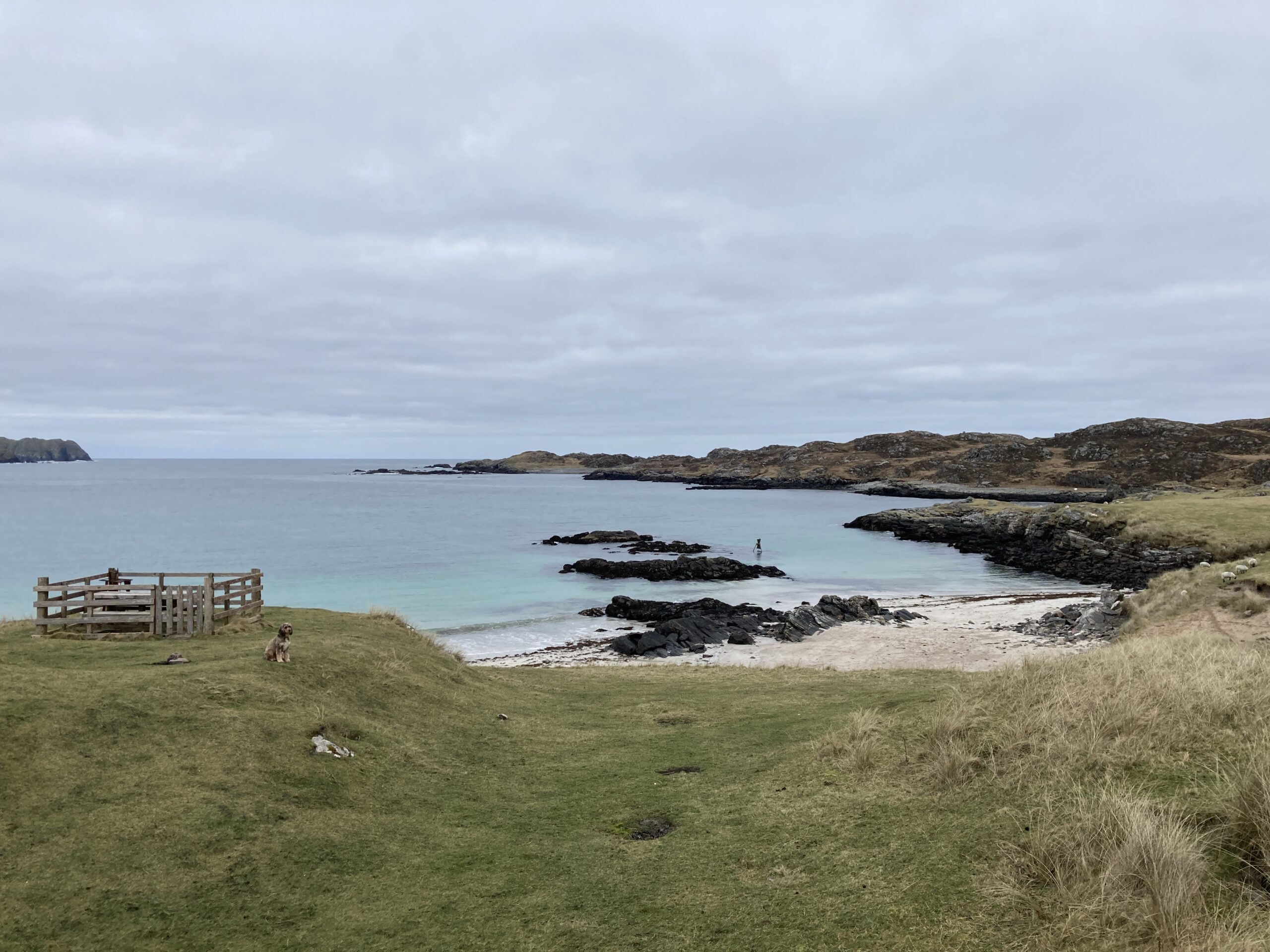
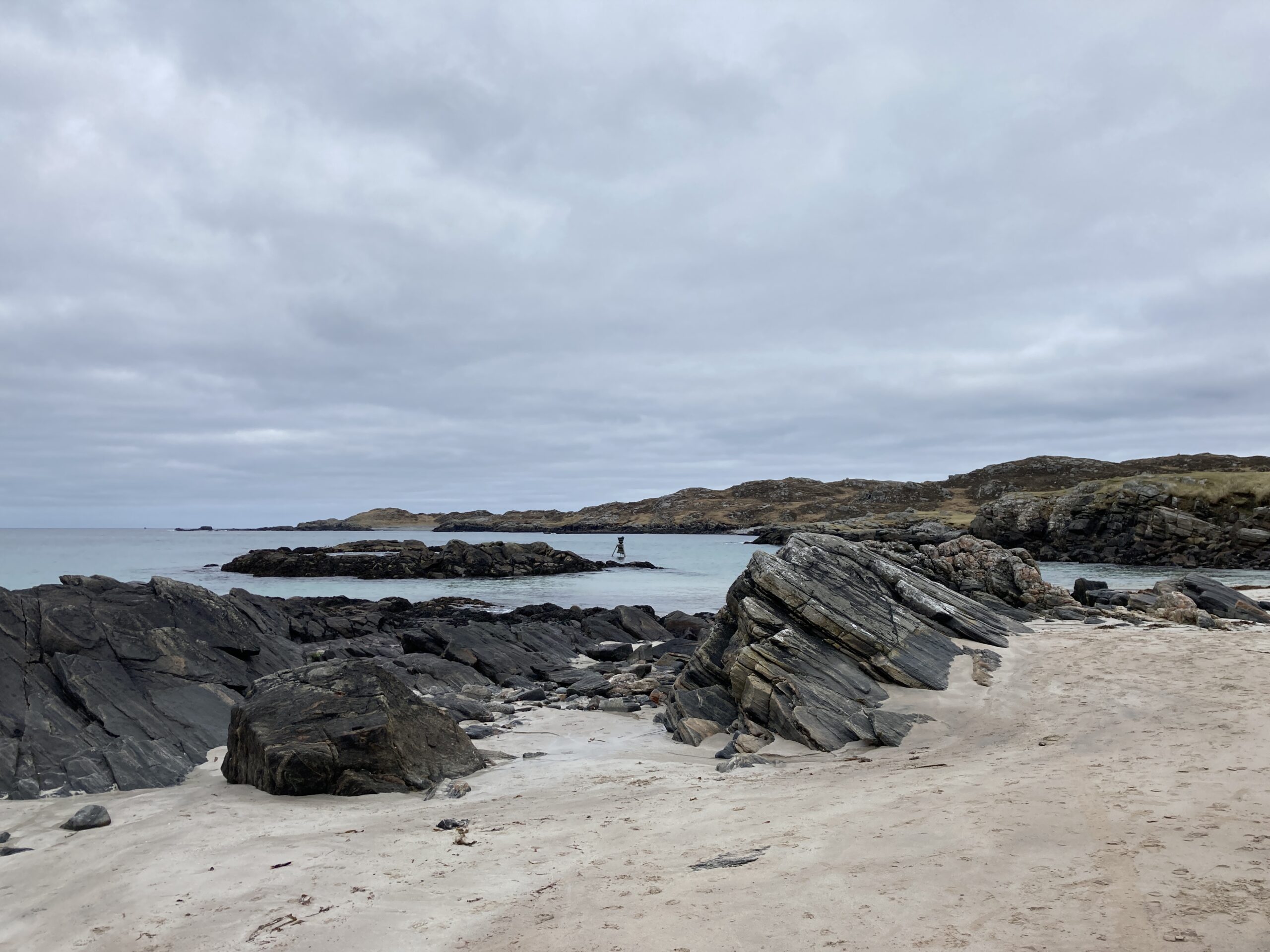
Bosta Beach is a small beach compared to others in the Western Isles, but its white sand, clear waters and spectacular views make it worth the journey.
The beach is also home to one of the Time and Tide Bells placed around the British coastline. Designed by artist Marcus Vergette, it creates a constant musical pattern, played by the movement of the waves and tides. It also serves as a marker for rising sea levels.
Iron Age House
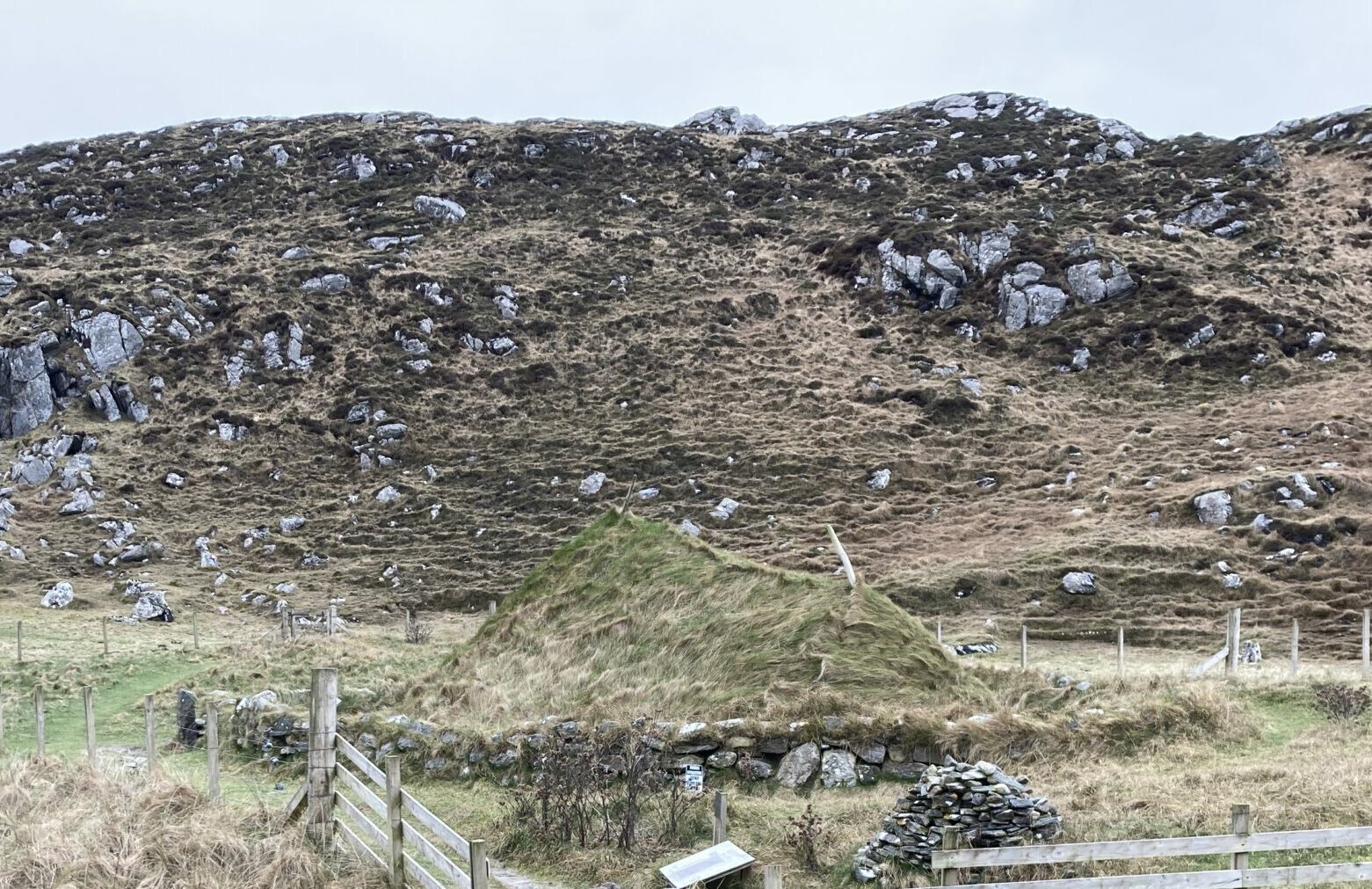
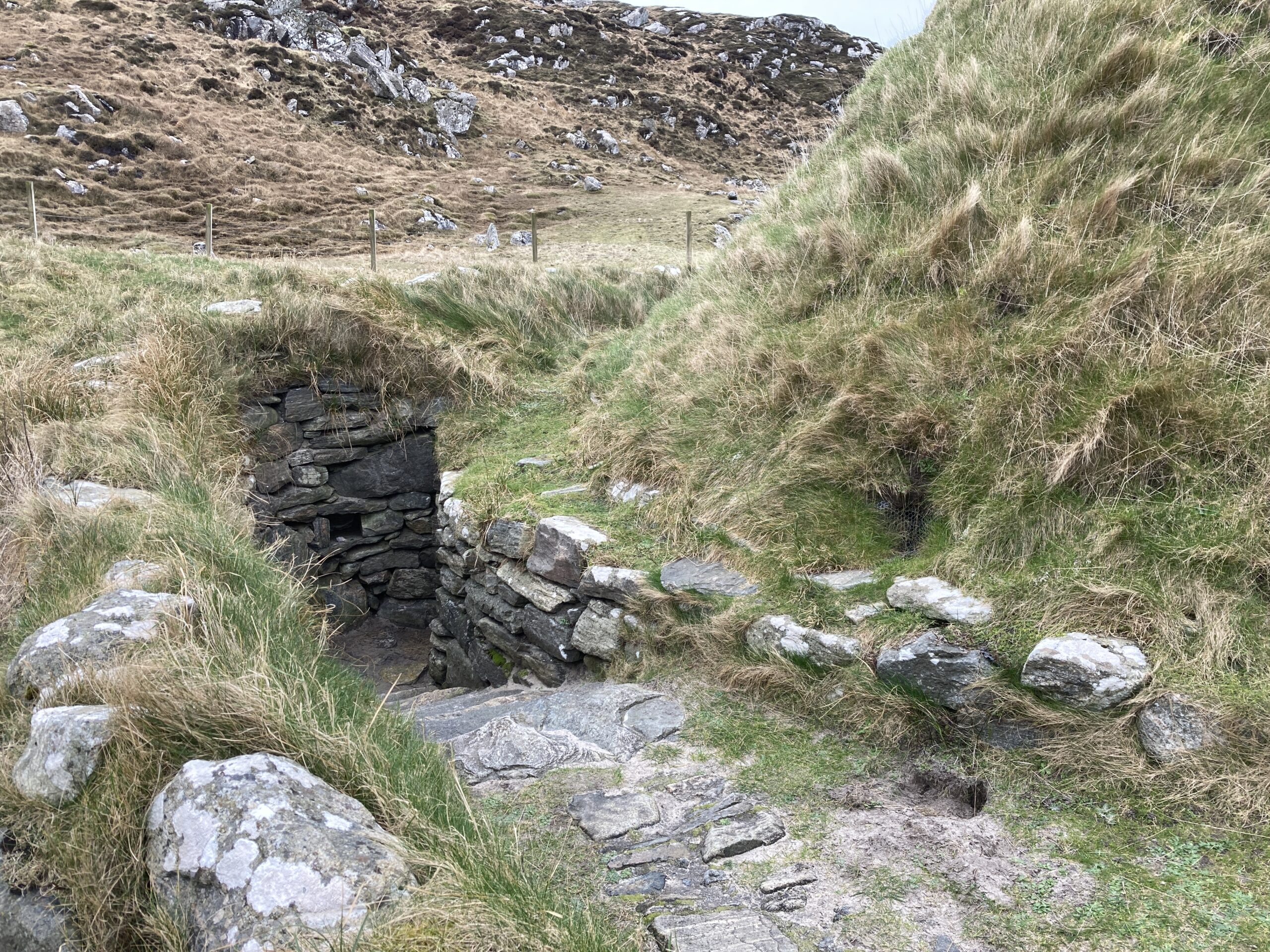
In 1992 a wild storm started to expose the stone walls of a late Iron Age village which had been hidden under sand dunes at Bosta Beach.
The site was excavated and revealed a settlement of houses that dating back to 400 – 800 AD. Although the village was mapped during the excavation, the structures themselves could not be preserved and are now hidden beneath the sand again.
A life-size reconstruction was made of one of the original buildings on more permanent ground, using the same materials and methods used in similar structures at the time.
The Iron Age house is open to visitors throughout the summer months and provides a unique insight into how early settlers lived. More information about the excavations and some of the finds can be seen in the local museum at Breaclete Community Centre. See https://berneramuseum.wixsite.com/website.
In more recent times Bosta was inhabited by people living in traditional Black Houses until lack of fuel forced the village to be abandoned once more in 1875. The remains of these Black Houses are still visible.
In short
Bosta is a small sheltered beach at the north end of Great Bernera, an island off west Lewis reached by road bridge. Behind it stands a full-size reconstruction of an Iron Age house, built after storms exposed buried dwellings in 1993 and open to visitors in summer. A Time and Tide Bell hangs at the water’s edge and is rung by the rising tide. There is a car park above the beach.
Frequently asked questions
What is the Iron Age house at Bosta?
A full-size reconstruction of a Pictish-era house, built after storms in 1993 exposed a group of buried dwellings in the dunes behind the beach. The original site was re-covered to protect it. The reconstruction opens to visitors during the summer and is staffed by the local community.
What is the bell on Bosta Beach?
One of the Time and Tide Bells by the artist Marcus Vergette, a series installed around the coast of Britain. It hangs at the water’s edge and is rung by the rising tide rather than by hand.
How do you get to Bosta Beach?
Cross the bridge onto Great Bernera from the B8059 west of Callanish, then follow the road north to its end. There is a car park above the beach. It is roughly a 45 minute drive from Stornoway.
Is Bosta Beach good for swimming?
It is more sheltered than the open Atlantic beaches on the west coast, which makes it one of the gentler options, but the water is cold all year and there is no lifeguard.